350+ 5-Star Reviews
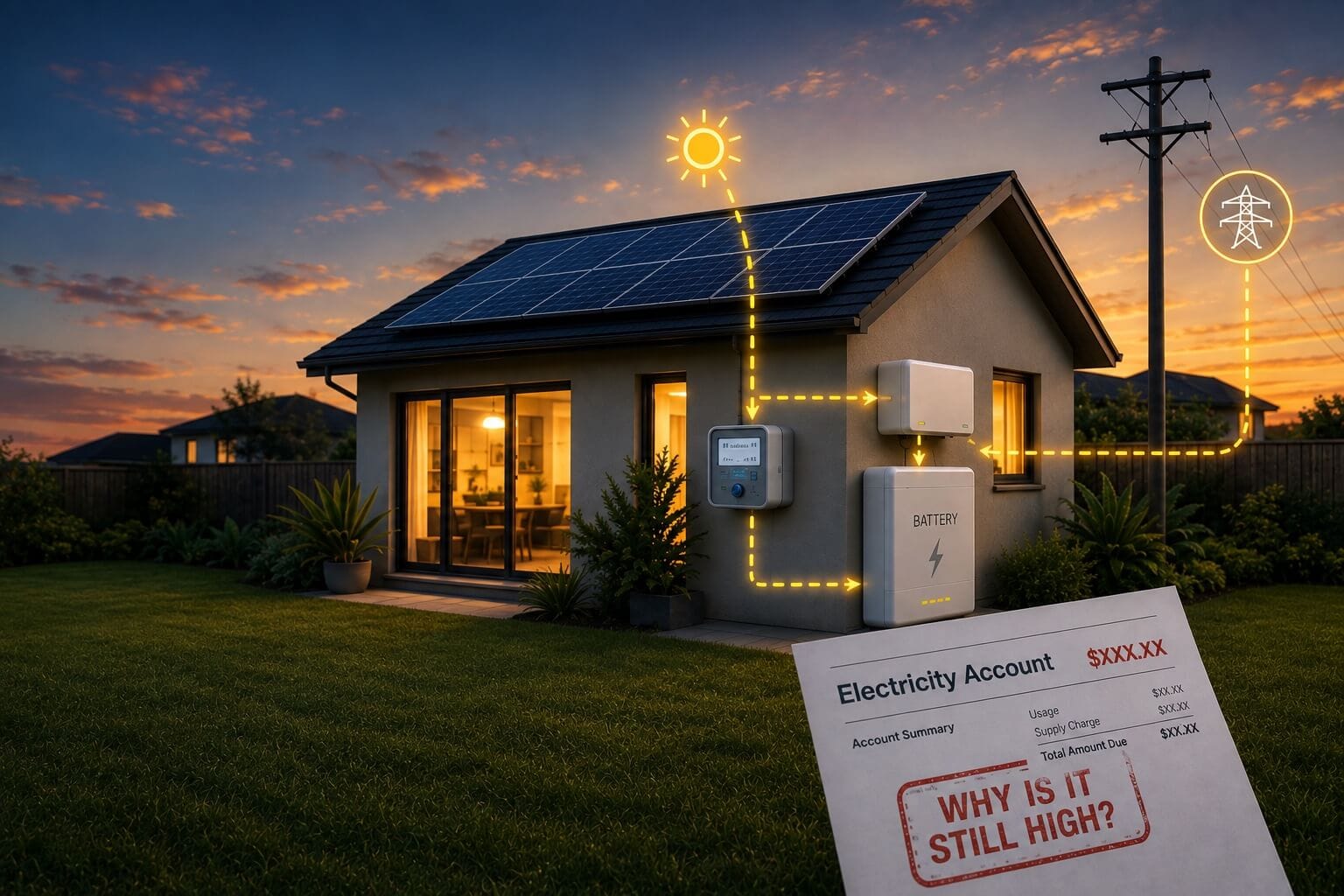

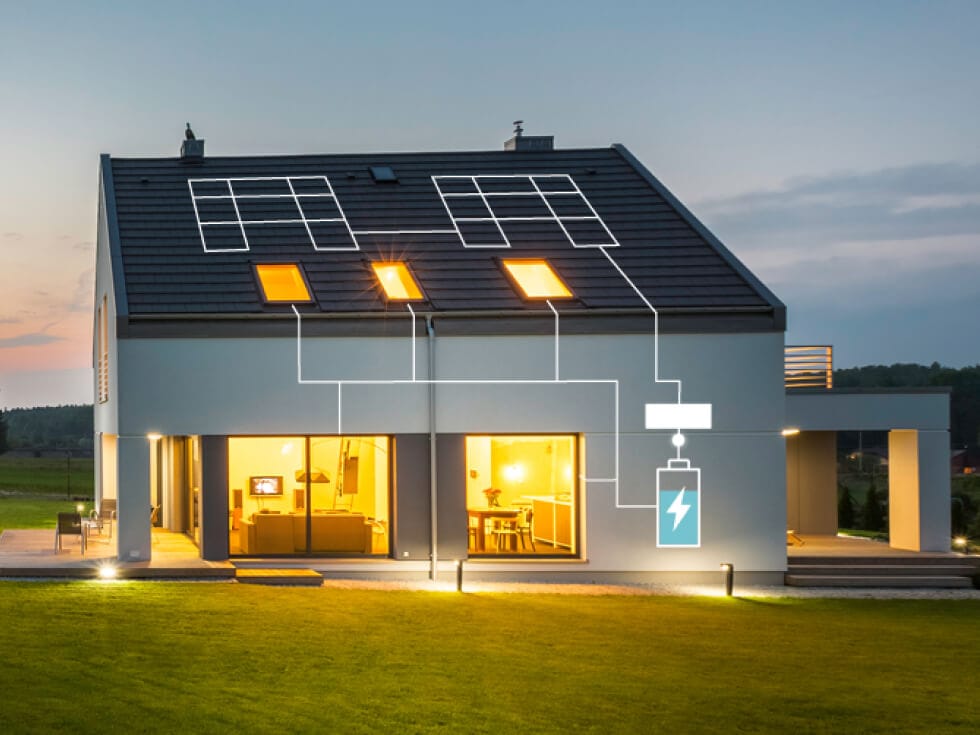
You’ve installed a home battery.
You’ve got solar on the roof.
So why are you still getting a power bill?
This is something we’re starting to see more often on the Sunshine Coast, particularly with the larger battery systems now being installed.
And in many cases, there’s absolutely nothing wrong with the battery.
The problem is that the solar system simply isn’t generating enough electricity to run the house and fully charge the battery.
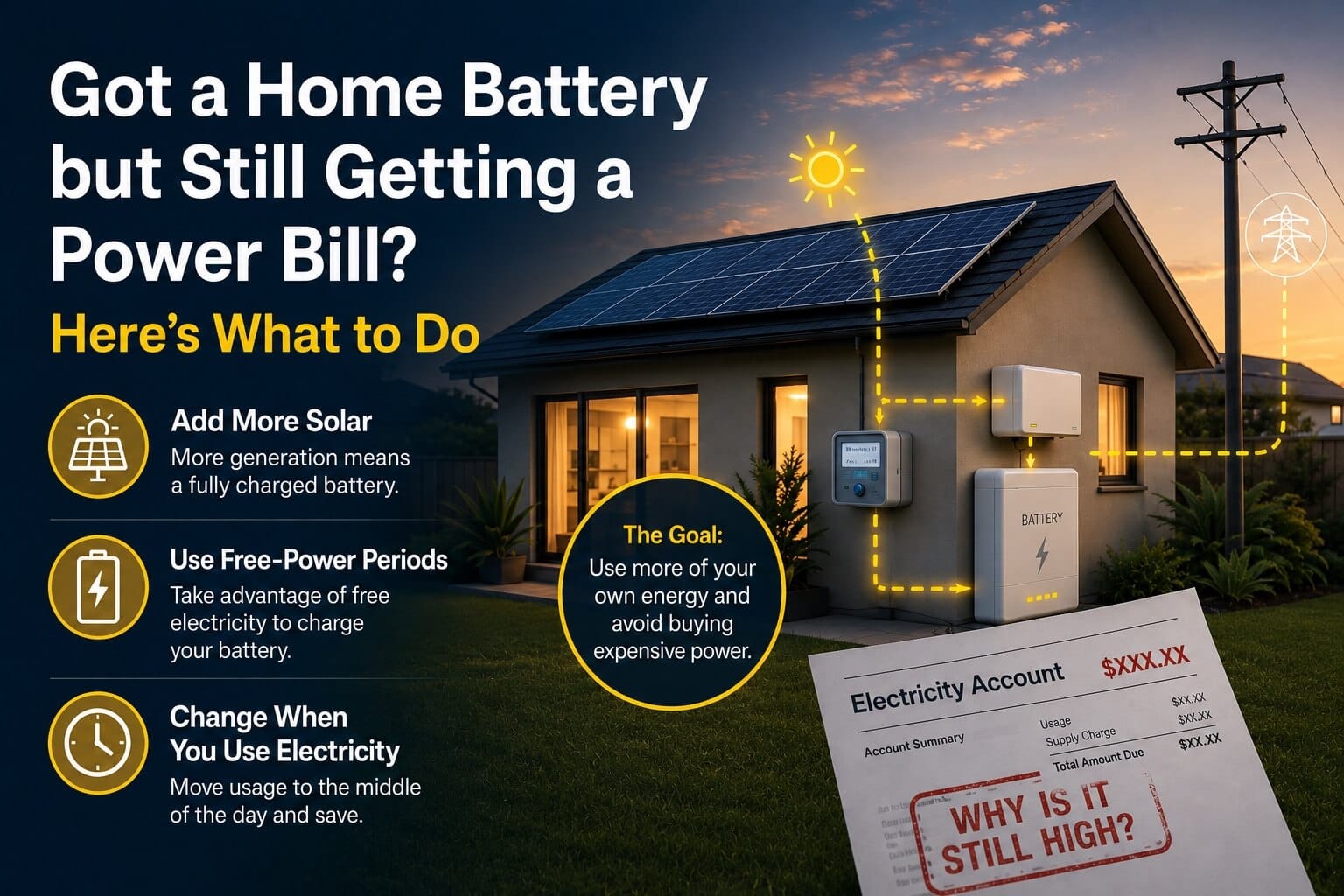
If that’s happening at your home, there are three things I would be looking at:
- Can we add more solar?
- Can we use the new free-power electricity plans to charge the battery?
- Can we change when the home uses electricity?
Let’s look at each one.
First: A Battery Doesn’t Generate Electricity
This is probably the most important thing to understand.
Your battery stores electricity. Your solar panels generate it.
If you have a 30kWh battery, you need to find enough energy to actually put 30kWh back into that battery.
And your solar has other work to do first.
During the day, your solar generation will generally:
- power whatever your house is using;
- use the excess to charge your battery; and
- export anything left over to the grid.
Imagine your home uses 30kWh of electricity per day and you’ve installed a 30kWh battery.
On paper, that sounds like a great match.
But if your solar system only generates 30kWh that day and your house consumes 15kWh of that electricity while the sun is shining, you’ve only got around 15kWh left to put into the battery.
Your 30kWh battery may only end up half charged.
Once that energy is used overnight, you’re back to buying electricity from the grid.
The battery isn’t necessarily too small. You simply haven’t generated enough energy to fill it.
This was exactly the issue that came up in a recent conversation we had around battery systems — larger batteries are fantastic, but you still need enough energy available to charge them.
Winter Can Really Expose the Problem
A solar and battery system can look fantastic through summer.
Longer days mean more solar generation.
Your battery might be fully charged by lunchtime and still have plenty of solar available to run the house throughout the afternoon.
Then winter arrives.
The days get shorter, solar generation drops and your household consumption can increase.
You might also be running air conditioning for heating, using the dryer more often or simply spending more time inside.
Suddenly the battery that was hitting 100% every day is only getting to 50%, 60% or 70%.
Then it runs out during the night.
That’s when you start importing electricity from the grid again.
And eventually, another power bill arrives.
That doesn’t necessarily mean the battery system isn’t working.
It means we need to look at where the energy to charge it is coming from.
Option 1: Add More Solar
For many homes, this is the first thing I’d look at.
When people see their battery running flat, their immediate reaction can be:
“Maybe I need another battery.”
But another battery won’t necessarily solve the problem.
If you already can’t fully charge your existing battery, adding another 10kWh or 20kWh of battery capacity just gives you more empty battery.
It’s like installing a bigger water tank without increasing the amount of water going into it.
Sometimes the better investment is more solar panels.
More solar gives you additional generation to:
- run the house during the day;
- recharge your battery;
- keep the battery charging later into the afternoon; and
- reduce the amount of electricity you need to purchase from the grid.
This is particularly relevant for older solar systems.
You might have installed a 5kW or 6.6kW solar system years ago when the goal was simply reducing your daytime electricity consumption.
Now you’ve added a large battery.
The battery technology might be brand new, but you’re still relying on the original solar system to provide the energy.
Your solar and battery need to be sized as one complete energy system.
Option 2: Charge Your Battery With Free Electricity
This is where things have become really interesting in 2026.
From 1 July 2026, the Australian Government’s new Solar Sharer Offer became available to eligible households in South East Queensland.
It gives eligible customers three hours of free electricity every day between 11am and 2pm, with up to 24kWh available during that free-power period.
You need a smart meter and you need to opt into an eligible electricity plan.
Here’s the interesting part for battery owners:
You can potentially use that free electricity to charge your battery.
So let’s go back to our previous example.
You’ve got a 30kWh battery, but your solar hasn’t generated enough electricity to fully charge it.
Instead of leaving the battery half empty and then purchasing expensive grid electricity that night, you could potentially use the free electricity window to top it up.
You can then use that stored electricity later in the afternoon, evening and overnight.
That’s a completely different way of thinking about a home battery.
You’re no longer relying exclusively on:
Solar → Battery → House
You can potentially use:
Solar + Free Grid Power → Battery → House
For some households, that could make a huge difference to the economics of their battery.
Some Retailers Are Offering Even More Free Power
The government Solar Sharer Offer isn’t the only option.
Some electricity retailers are offering their own free-power plans.
For example, at the time of writing, OVO Energy advertises a Free 4 Plan, which provides eligible customers with free general electricity usage between 11am and 3pm every day.
That’s four hours where you could potentially be:
- charging your home battery;
- charging an EV;
- running your pool pump;
- heating your hot water;
- running the dishwasher;
- washing and drying clothes; and
- cooling or heating the house.
Instead of exporting cheap solar electricity to the grid during the middle of the day and then buying expensive electricity back later, the goal is to make the most of the cheapest electricity available to you.
And if the electricity is free, that’s a pretty compelling price.
But Don’t Just Switch Electricity Plans Because It Says “Free”
There’s an important catch.
You need to look at the entire electricity plan.
Free electricity for three or four hours doesn’t automatically mean you’ll have the cheapest power bill.
You still need to consider:
- electricity rates outside the free period;
- peak electricity rates;
- daily supply charges;
- controlled load charges;
- solar feed-in tariffs; and
- how much electricity your particular household uses at different times.
For example, some free-power plans may have higher electricity rates outside their free window.
Some may also offer a very low solar feed-in tariff — or none at all.
So if you’re exporting a huge amount of solar every day, that matters.
The question isn’t:
“Which electricity retailer has free power?”
It’s:
“Which electricity plan works best with my solar, battery and household usage?”
That’s a much more important question.
Option 3: Change When You Use Electricity
The third option doesn’t require adding another solar panel or battery.
It’s simply changing when you use electricity.
This is becoming increasingly important.
If electricity is free between 11am and 2pm, why would you deliberately run your biggest electrical loads at 6pm?
Where practical, you could move things like:
- pool filtration;
- hot water;
- washing;
- clothes drying;
- dishwasher cycles;
- EV charging; and
- some air-conditioning use
into the middle of the day.
You might even pre-cool your house during the free electricity period rather than asking your air conditioner to work its hardest during the evening peak.
Obviously, you shouldn’t have to completely reorganise your life around your electricity retailer.
But some simple automation and changes to timers can make a surprisingly big difference.
As we discussed when looking at one real-world battery setup, getting the best result sometimes means changing and manipulating when electricity is used around the home.
The Goal Has Changed
This is where I think residential solar is heading.
Ten years ago, the conversation was pretty simple:
Put solar panels on your roof and reduce your electricity bill.
Today, it’s much more sophisticated.
We’ve now got:
Solar + Battery + Electricity Plan + Smart Meter + Household Usage
And they all need to work together.
A well-designed system isn’t necessarily one that never touches the electricity grid.
It’s one that avoids buying expensive electricity from the grid.
If the grid wants to give you electricity for free during the middle of the day, there’s nothing wrong with using it.
Charge the battery.
Charge the car.
Heat the hot water.
Run the pool.
Then use your battery when electricity becomes expensive again.
That’s a much smarter way of looking at home energy.
So Why Are You Still Getting a Power Bill?
If you’ve installed a battery and you’re still receiving a bigger power bill than expected, don’t immediately assume something is wrong.
And don’t immediately buy another battery.
Start by looking at the data.
We want to know:
How much electricity is your solar generating each day?
How much electricity does your home consume?
Is your battery reaching 100%?
What time does the battery run flat?
When are you importing electricity from the grid?
How much are you paying for that electricity?
Once we have that information, the solution usually becomes much clearer.
If the battery isn’t fully charging:
You may need more solar generation.
If the battery is full but runs out overnight:
You may need more battery capacity or need to reduce overnight consumption.
If solar production is poor during winter:
You might be able to top the battery up using a free or cheap grid electricity period.
If you’re using lots of electricity during expensive periods:
We might be able to move those loads to the middle of the day.
And in many cases, the best answer will be a combination of all three.
Before Spending More Money, Understand Your Energy
This is probably the biggest takeaway.
Don’t just keep adding equipment.
If you’ve already invested in solar and a battery, the next step should be understanding exactly how your house is using energy.
Sometimes another row of solar panels is the answer.
Sometimes changing your electricity plan is the answer.
Sometimes it’s changing a few timers.
And sometimes you genuinely do need more battery storage.
But we should be able to see that in the data before you spend the money.
Still Getting a Power Bill After Installing a Battery?
If you’re on the Sunshine Coast and you’ve installed a solar battery but you’re still buying more electricity from the grid than you expected, we can help work out why.
At Tenmen Electrical, we can look at your solar generation, battery performance and household electricity consumption to work out where the problem is.
From there, we can look at whether you need more solar, a different battery strategy, better energy management or a combination of the three.
Already have a battery but still getting a power bill? Get in touch with Tenmen Electrical and let’s work out where your energy is going.
Electricity plans, rates, eligibility and free-power periods can change. The examples in this article are current at the time of writing. Always check the current rates, terms and eligibility with the electricity retailer before changing plans.